Your first electric decision

Start with the
useful stuff.

Plain-language EV buying and charging guidance for Bangladesh—whether you are comparing your first car, installing a charger or planning through monsoon season.

Browse the guides ↓
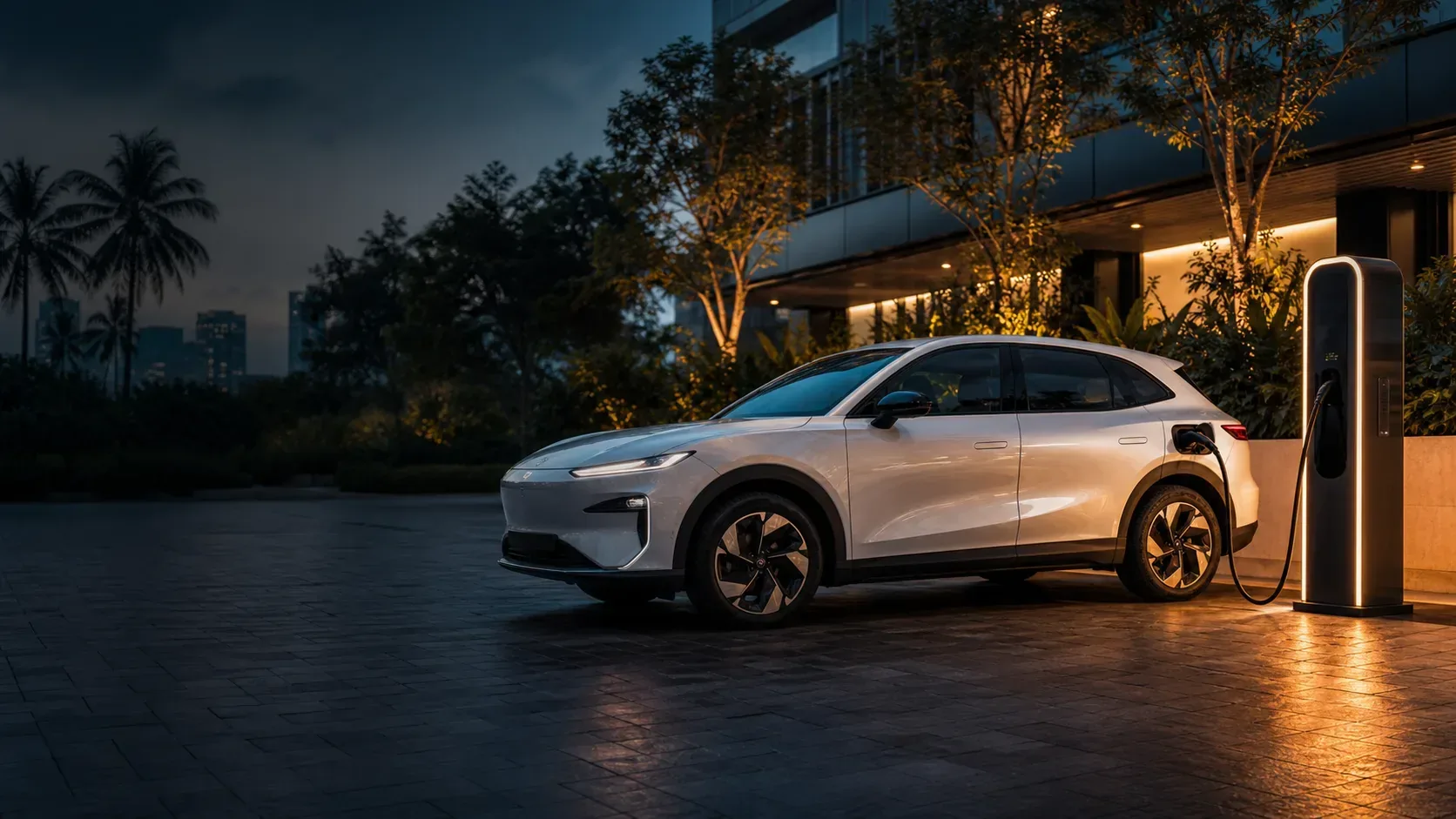
Electric vehicle charging at a modern charging station

ChargeBangla guide / 01

A practical guide to
EV ownership.

Save this page, send it to a family member, or jump directly to the question you need answered today.

01Buying first

Choose the battery before the badge.

Battery size is the first number to compare. It determines how much energy you carry, how much range buffer you have in Dhaka traffic and heat, and how often you need to charge.

↗Start with usable battery capacity in kWh, not only the advertised range. A larger pack usually gives more flexibility, but also adds cost and weight.

↗Match the battery to your weekly routine: calculate your normal daily kilometres, then leave a practical buffer for traffic, air-conditioning, detours and battery reserve.

↗Check the test cycle behind the range figure. WLTP, NEDC and CLTC are not interchangeable, and Bangladesh heat, congestion and cabin cooling can reduce real-world range.

↗Then compare charging speed, warranty, service support, ground clearance, tyres, safety equipment and parts availability. A large battery cannot compensate for poor local support.

02At home

Make home charging boring—and safe.

Most first-time owners should charge overnight at home. The safe setup is a correctly rated EVSE, a sound circuit, weather-protected equipment and installation by a qualified electrician.

↗Ask an electrician to inspect the meter, main breaker, earthing, cable size, socket condition and available load before choosing a 3.3, 7 or 11 kW charger.

↗Use a dedicated circuit with the protection specified by the charger and local electrical requirements. Do not use a hot, loose, cracked or improvised extension socket for overnight charging.

↗Keep the plug, control box and connection points dry and off the ground. Do not charge through standing water, with a damaged cable, or under a leaking roof.

↗A portable Mode 2 EVSE is useful as a backup, but it is not a substitute for a properly designed wallbox. Buy equipment with documented protection and warranty, and have the installation tested.

03Charging basics

AC for the night. DC for the road.

AC charging is usually the economical, battery-friendly routine. DC fast charging is the useful travel tool, but it costs more at many public stations and is limited by the car’s own DC charge curve.

↗AC power is converted inside the car. A 7 kW wallbox does not mean every EV will accept 7 kW; the onboard AC charger may cap the rate lower.

↗DC fast charging sends controlled DC from the station to the battery. The car controls the power, and the fastest part is usually between a lower and middle state of charge—not near 100%.

↗For daily use, set a charge limit according to the manufacturer’s guidance and use DC fast charging when you need a quick top-up or are travelling between cities.

↗Before a long trip, check the station’s connector, operating hours, payment method, recent status and backup route. A charger listed online may still be occupied or offline.

04Rain & flooding

Rain is normal. Floodwater is not.

An undamaged EV is designed for rain and wet roads. It may avoid an ICE car’s air-intake and exhaust risks in shallow water, but tyres, brakes, traction, hidden drains and moving water remain serious hazards.

↗Never use an IP rating as the car’s wading permission. IP67/IP68 describes a tested electrical enclosure; it does not rate the whole vehicle or guarantee safe driving through a flooded road.

↗Wading depth is model-specific. Read the owner’s manual and avoid water of unknown depth, fast-moving water, water near the door sill, or any route where you cannot see the road surface.

↗If you must cross a shallow, known puddle, go slowly and steadily, leave extra stopping distance and test the brakes gently afterward. Avoid creating a bow wave around pedestrians or motorcycles.

↗If water reaches the cabin, the vehicle is submerged, high-voltage components are damaged or a warning appears: leave safely, do not charge or touch orange cables, and arrange an authorised inspection.

05Ports & plugs

Buy the port, not the promise.

Always photograph the car’s inlet and confirm the exact trim before ordering a cable or charger. The connector on the wallbox and the connector on the car must match, and power must match what the car can accept.

↗Type 2 is the common AC connector across Europe and is widely seen on Bangladesh-market EVs. CCS2, also called Combo 2, adds two larger DC pins for fast charging.

↗Type 1 and CCS1 are common in North America and some imported vehicles. GB/T is common on Chinese-market vehicles, while CHAdeMO remains present on some Japanese imports. NACS is increasingly used in North America.

↗For Bangladesh, confirm whether your car uses Type 2/CCS2, GB/T, Type 1/CCS1 or another inlet before buying a wallbox, portable EVSE or adapter. An adapter is not a cure for an incompatible charging protocol or unsafe installation.

↗Ask the dealer for the AC and DC inlet photos, maximum AC kW, maximum DC kW, cable requirements and warranty terms in writing.

06More kilometres

Win range with small habits.

Range is shaped by speed, traffic, tyres, payload, air-conditioning and weather. In Bangladesh, smooth driving and a realistic buffer matter more than chasing the brochure number.

↗Keep tyres at the recommended pressure and replace worn tyres. Wet-road grip and energy efficiency both suffer when tyres are neglected.

↗Use a moderate, comfortable cabin setting, pre-cool while plugged in when possible, remove unnecessary weight and avoid repeated hard acceleration.

↗On open roads, moderate speed normally uses less energy than high speed. Plan charging with a buffer rather than arriving at a charger on the last few percent.

↗Track your own consumption in kWh/100 km over several weeks. That is more useful for planning than comparing a single laboratory range number.

07What to buy

Where to get a home or portable charger.

Start with the vehicle distributor, then compare an authorised installer’s site survey and warranty. Online marketplace listings can be useful for research, but compatibility, earthing and after-sales support matter more than a low price.

↗Ask the dealer whether a wallbox, portable EVSE, cable and installation are included. Get the connector, amperage, phase, IP rating and warranty recorded on the quotation.

↗For a local installation enquiry, Ekhon Charge advertises home AC charging services. Zayanex lists Type 2 wallboxes and portable options, while ARRA lists a Type 2 + Schuko portable charger. Availability and pricing change—confirm directly before paying.

↗A portable charger is a backup for compatible sockets and modest charging power; it should have current protection, temperature monitoring and a proper earth. Do not buy an unbranded cable based only on a marketplace photo.

↗Have the installer label the circuit, demonstrate emergency shutoff and explain what to do if the charger or cable gets wet. Keep the invoice and serial number for warranty support.

New detailed guide

Keep your battery healthy. Keep going.

A practical battery-care checklist covering the NMC/NCA 20–80% habit, why it does not blanket-apply to Bangladesh’s mostly LFP EVs, LFP calibration, AC/DC charging, heat and safe home charging.

Read the detailed guide ↗

Battery chemistry, in brief

Start with LFP—then understand the trade-offs.

LFP is a strong first chemistry to investigate in a hot country because of its durability and thermal stability. The roughly 80% daily limit mainly suits NMC/NCA; it is not a blanket rule for Bangladesh’s mostly LFP EVs, whose indicated 0–100% range is generally usable and may need periodic full charging for BMS calibration. Pack cooling, charge guidance and warranty still matter.

See the detailed battery types guide ↗

Electricity in plain English

Watt, kilowatt,
and the bill.

Think of electricity like water: watts are the flow rate, kilowatts are a bigger flow rate, and kilowatt-hours are the amount delivered over time.

WWattHow fast electricity is flowing right now. A phone charger might use 20 W.
kWKilowatt1,000 watts. A 7 kW home charger can deliver energy faster than a 3.3 kW charger.
kWhKilowatt-hourThe amount of energy used. Your EV battery is described in kWh, and your electricity bill charges per kWh.

Simple example: a 7 kW charger running for 2 hours can deliver about 14 kWh. If your rate is ৳12 per kWh, the energy charge is about ৳168—before any fixed fees, taxes or special tariff rules.

EV charging costEstimate · BDT
Estimated cost per charge৳480
8.0 kWh from the grid৳5,760 / month৳69,120 / year

This estimate assumes about 10% charging loss. Replace ৳12/kWh with the marginal rate on your bill; Bangladesh tariffs can vary by customer type, slab, meter and fees. Public DC charging may add a separate service fee.