Bangladesh · used-car inspection

Buying a used EV?
Inspect the story.

Service, warranty, battery, accidents, charging and documents—the checks that deserve your attention before you pay.

View the checklist ↓
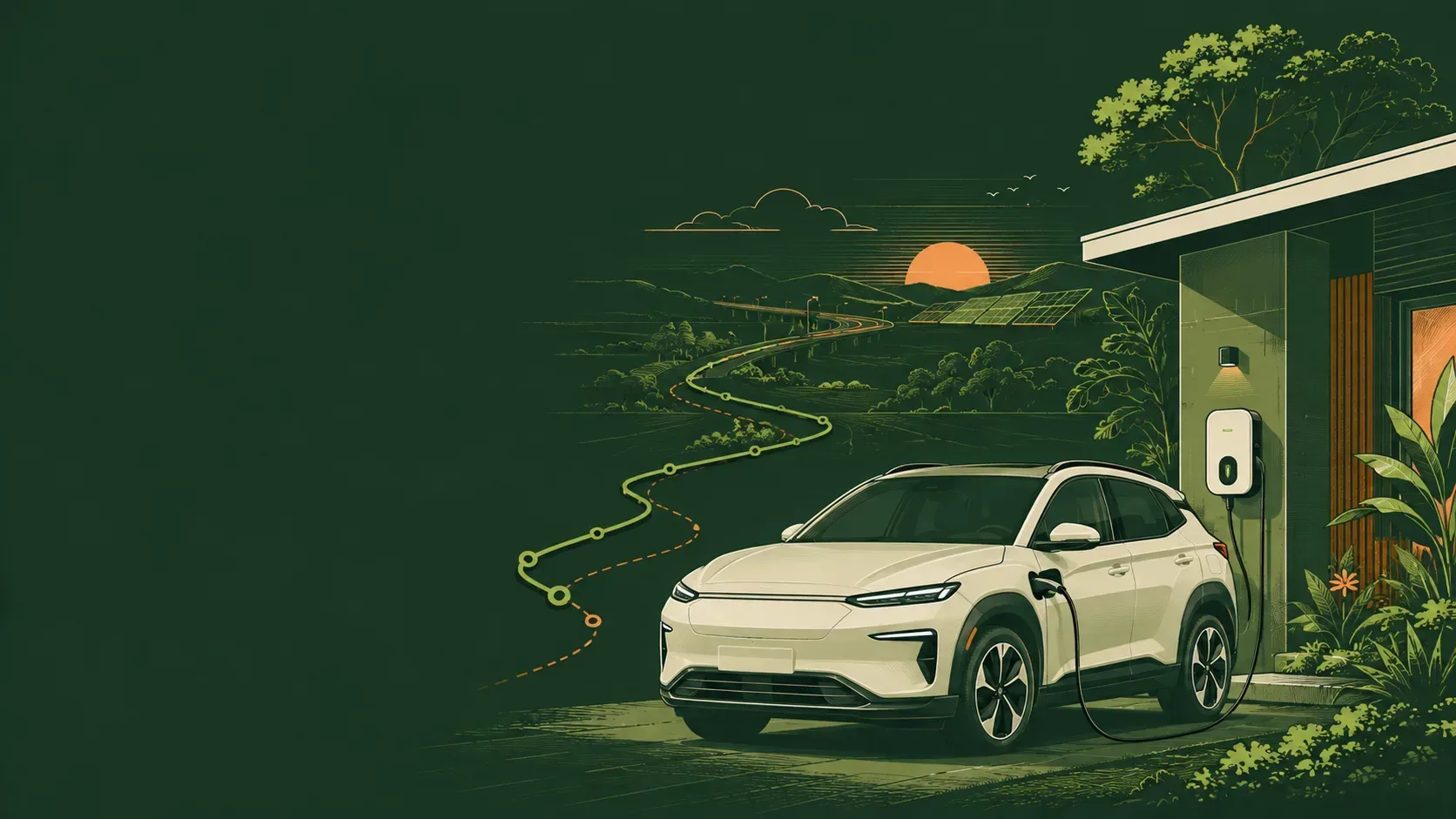
Illustration of an electric car charging at home

The main rule

Do not buy
the unknown.

The biggest saving in a used EV is avoiding the wrong car. Make room in your budget and schedule for an independent inspection, written records and a realistic service path.

01 Start with support

Buy a car you can actually maintain in Bangladesh.

A good used EV is not only a healthy car. It is a car with a realistic path to diagnosis, parts and repairs when something goes wrong.

↗Prefer a brand with an official or genuinely capable service centre in Bangladesh. Ask whether the technicians are trained to work on high-voltage systems.

↗Confirm that the service centre supports this exact model, battery, charging inlet and imported market variant—not only a similar-looking car.

↗Ask about diagnostic equipment, common replacement parts, battery repair capability, roadside support and typical parts lead times.

↗A lower purchase price is not a bargain if one software fault or charging fault leaves the car unusable for months.

02 Warranty

Try to buy within the battery warranty period.

A remaining manufacturer warranty can reduce the largest financial uncertainty in a used EV. But warranty coverage follows the exact vehicle and market, not a sales promise.

↗Ask for the original warranty document and calculate the remaining time and mileage from the vehicle’s first-use date.

↗Confirm whether the warranty transfers to a second owner and whether it is valid in Bangladesh for this VIN.

↗Check what the warranty actually covers: battery capacity, defects, inverter, motor, onboard charger, charging port and high-voltage wiring may have different terms.

↗Do not assume a warranty from another country will be honoured locally. Get confirmation in writing from the authorised distributor or manufacturer.

03 Official inspection

Even after warranty, pay for a proper inspection.

When a car is outside warranty, an inspection is more valuable—not less. The official service centre can often see faults and history that a test drive cannot reveal.

↗Request a written diagnostic report from the official service centre where one exists.

↗Ask the technician to scan the high-voltage system, inverter, onboard charger, charging port, thermal-management system and 12-volt system.

↗Ask for the battery state of health, usable capacity, cell balance and stored fault codes. A full dashboard range estimate is not a battery test.

↗If no official centre exists, use a reputable EV specialist with model-specific tools and high-voltage training.

04 Battery condition

Modern EV batteries are designed to last—but care still matters.

A healthy battery should not be treated as a disposable item or a guaranteed lifetime component. Inspection helps confirm that the battery has been used and protected normally.

↗Look for a measured battery-health report, not only the seller’s claim that the range is “still good”.

↗Ask how the car was charged: mostly AC at home, frequent DC fast charging, long periods at a high state of charge or repeated deep discharge all provide useful context.

↗Check for battery-temperature warnings, charging interruptions, isolation faults, impact damage and signs of water entry.

↗Battery chemistry alone does not tell the whole story. Cooling design, software limits, climate, age, mileage and previous damage also affect condition.

↗Compare the test result with the manufacturer’s warranty threshold and with the range you need—not with a brand-new car’s brochure range.

05 Accident and flood history

Look for the story the paint is hiding.

A clean-looking used EV may still have structural, battery-enclosure or electrical damage from a crash or flood.

↗Compare panel gaps, paint shade, overspray, fasteners, glass dates and underbody marks. Inspect both sides in daylight.

↗Check the airbags, seatbelts, warning lights, cameras, sensors, lights, steering and suspension.

↗Inspect the battery enclosure and underbody for dents, cracks, corrosion or fresh underseal that may hide repairs.

↗Look for damp carpets, corrosion in connectors, mud in hidden spaces and unexplained electrical faults. Flood exposure is especially serious for high-voltage systems.

↗Ask for insurance, auction, import and repair records. If there was a significant collision or flood, require an official battery and safety inspection before considering the car.

06 Charging test

Plug it in before you pay.

A car that drives well can still have a faulty inlet, onboard charger, cable or DC charging system.

↗Test AC charging with the supplied cable or a compatible known-good charger. Check that charging starts normally and does not stop unexpectedly.

↗If the car supports DC fast charging, test that too. Confirm the connector type and that the charge rate is reasonable for the vehicle.

↗Inspect the charging inlet for bent pins, corrosion, heat marks, looseness or water damage.

↗Confirm that the portable EVSE, cable, adapters and wallbox (if included) are the correct equipment for this exact car.

↗Do not buy a charger that bypasses earthing or safety checks. Use reputable equipment and have the electrical supply assessed by a competent electrician.

07 Test drive

Listen for warnings, not just a smooth ride.

EVs are quiet, so small noises and alerts can be easier to notice. Test the car cold and warm, in traffic and on a rough surface.

↗Check for warning messages at startup and after the test drive. Ask the seller not to clear fault codes before inspection.

↗Test acceleration, regenerative braking, normal braking, steering, suspension, air-conditioning, heating, lights, cameras and driver-assistance features.

↗Check tyre wear and alignment. EV torque and vehicle weight can wear tyres quickly when the car has been driven aggressively or maintained poorly.

↗Test the 12-volt battery and confirm that the car wakes up, locks, unlocks and charges normally after sitting for a while.

↗Drive over a safe uneven surface and listen for suspension knocks, wheel-bearing noise or underbody contact.

08 Documents and software

The paperwork should be as healthy as the battery.

Imported EVs can have regional software, app and charging limitations. Resolve those before the sale, not after it.

↗Match the VIN on the car, documents, diagnostic report and insurance records.

↗Confirm import, customs, registration, tax and ownership documents, and check for outstanding finance or legal claims.

↗Ask whether the car’s app, navigation, remote functions, language, over-the-air updates and connected services work in Bangladesh.

↗Confirm the original country and trim. A vehicle built for another market may have different charging hardware, warranty terms and safety equipment.

↗Get both keys, charging cables, manuals, service invoices and any adapter or accessory included in the written sale agreement.

09 Price and future resale

Price the risk you are taking.

The cheapest used EV can become the most expensive if its battery, service support or documentation is uncertain.

↗Compare the asking price with similar local cars of the same year, trim, mileage, battery size and warranty status.

↗Budget for immediate tyres, suspension, 12-volt battery, service, software, charger installation and insurance.

↗A car with a battery report, remaining warranty, official service history and common charging standard is usually easier to resell.

↗Do not assume an EV or hybrid will retain a fixed percentage of its original price. Model demand, importer support and buyer confidence can change quickly.

10 Walk-away checklist

A careful buyer is allowed to say no.

Do not let urgency, a limited-time price or a confident seller replace an inspection.

↗Walk away if the seller refuses an independent inspection or will not allow a charging test.

↗Be cautious when the VIN, mileage, service history or import documents do not match.

↗Treat battery-health claims without a report as unverified.

↗Do not buy a flood-damaged or collision-damaged EV without a specialist high-voltage and structural assessment.

↗If local service, parts or warranty support cannot be confirmed, price the vehicle as a high-risk purchase—or choose another car.

Sources & further reading

NHTSA · EV battery, service and flood safety ↗U.S. Department of Energy · EV maintenance ↗Electrical Safety First · charging safety ↗Toyota · example battery warranty terms ↗